A verified, evidence-based look at every ingredient in Lungora - what it does, how good the lung research really is, and the notable ingredients (like NAC and mullein) that Lungora leaves out.
Lungora contains magnesium (80 mg, as magnesium glycinate - the only disclosed dose) plus a 575 mg proprietary blend of alpha-lipoic acid, butcher's broom root, L-carnitine, turmeric extract (95% curcuminoids) and CoQ10 (as ubiquinone). The turmeric and CoQ10 have the most lung-relevant research; the others are more general antioxidant, circulation and energy ingredients. Because it's a proprietary blend, the individual doses (except magnesium) are hidden - a real transparency drawback.
Below is an evidence-based breakdown of every Lungora ingredient - what it is, what it's meant to do, the quality of the evidence (especially for lungs), and any safety notes. We've verified the ingredient list against Lungora's actual Supplement Facts label.
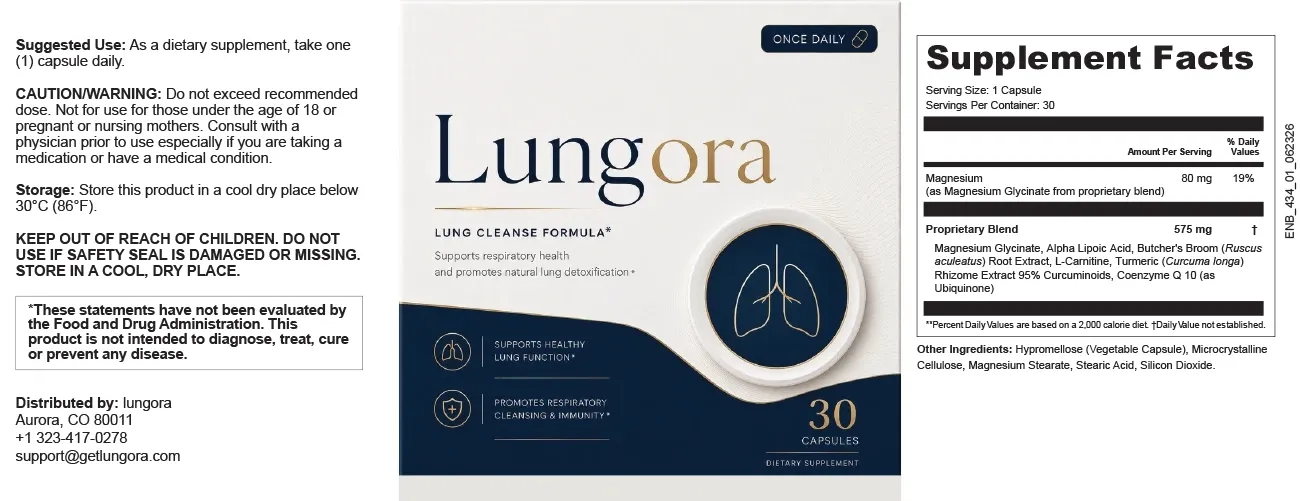
Lungora discloses only its magnesium (80 mg). The other five ingredients are grouped into a single 575 mg "proprietary blend," so you can't see how much of each you're getting. This is common in the supplement industry but is a genuine drawback: it means you can't compare doses to the research, and an ingredient could be present in a token amount. Transparency-focused brands list every dose.
Magnesium is the only ingredient with a fully disclosed dose. It's an essential mineral involved in hundreds of processes, and there is genuine (if indirect) relevance to breathing: magnesium helps relax smooth muscle, including the muscle around the airways, which is why intravenous magnesium is used in hospitals for severe asthma attacks. An oral 80 mg dose in a supplement is modest and far from a medical treatment, but the glycinate form is well-absorbed and gentle on the stomach. It supports general wellness and muscle function rather than being a proven lung therapy on its own.
Alpha-lipoic acid is a potent antioxidant that can regenerate other antioxidants (like vitamins C and E) and has been studied for reducing inflammatory markers. Since oxidative stress and inflammation play a role in many lung conditions, ALA's antioxidant action is a plausible supportive mechanism. However, most ALA research relates to nerve health and metabolic markers rather than lung function specifically, and the dose here is undisclosed within the blend - so treat it as general antioxidant support, not a proven respiratory ingredient.
Butcher's broom is traditionally used to support healthy circulation and venous tone. Its inclusion in a lung formula is unusual - its evidence base is in circulatory/venous health, not respiratory function - so its role here is best understood as general circulatory support (healthy blood flow can matter for oxygen delivery) rather than a direct lung ingredient. The dose is undisclosed, and lung-specific evidence is essentially absent.
L-carnitine helps transport fatty acids into cells' mitochondria for energy production, so it's included for cellular energy and exercise capacity. Some research in people with chronic lung disease has looked at carnitine and exercise tolerance, but evidence is limited and mixed. It's a reasonable energy-support ingredient, but not an established treatment for breathing or lung function, and its dose here isn't disclosed.
Turmeric's active curcuminoids are among the most-researched natural anti-inflammatory and antioxidant compounds, and this is the ingredient with the most direct lung relevance: small randomized trials of curcumin (often as nanocurcumin, for better absorption) have shown improvements in some respiratory measures and inflammatory markers in COPD and asthma. This gives Lungora a genuine, if modest, evidence-based anti-inflammatory angle. The catch: curcumin is poorly absorbed without an enhancer like piperine (not listed here), and the dose in the blend is undisclosed - so real-world effects may be limited.
CoQ10 is a mitochondrial antioxidant, and it's the other ingredient with real lung research behind it: CoQ10 levels are often lower in people with COPD, and small trials have linked supplementation to improved dyspnea (breathlessness), exercise capacity, and antioxidant status. That makes it a credible, evidence-supported inclusion for respiratory wellness and oxidative-stress support. As with the others, though, the ubiquinone form is less bioavailable than ubiquinol, and the dose is hidden in the blend - so keep expectations modest.
Just as important as what's in Lungora is what isn't. Most dedicated lung supplements are built around a set of classic respiratory ingredients - and Lungora contains none of the big ones:
This matters for expectations: if your goal involves mucus, phlegm or airway clearance, Lungora is missing the ingredients most associated with those effects. It's an antioxidant-and-circulation formula wearing a "lung cleanse" label.
Lungora includes two supported by lung-specific research antioxidants (turmeric and CoQ10) and a sensible, well-absorbed magnesium. But the turmeric lacks an absorption enhancer (piperine), the CoQ10 is the less-bioavailable ubiquinone form, the doses are hidden in a proprietary blend, and the classic lung ingredients (NAC, mullein) are absent. It's a reasonable antioxidant wellness blend - not a comprehensive, transparent, lung-targeted formula.
A useful way to judge any supplement is to line its ingredients up against the doses used in research - and here, Lungora's proprietary blend becomes a real obstacle. The studies that show benefits from curcumin in respiratory conditions typically use substantial, absorption-enhanced doses (often hundreds of milligrams of a bioavailable form, sometimes with piperine). The CoQ10 trials in COPD generally use around 90-120 mg or more per day. Because Lungora bundles turmeric, CoQ10 and three other ingredients into a single 575 mg blend, it's not possible to know whether any of them reaches a research-relevant dose. They could - or they could be present in modest amounts. This uncertainty is the core limitation of the formula.
For comparison, transparency-focused supplements list each ingredient's exact dose, letting you check them against the evidence. That's the standard worth looking for, and it's one Lungora doesn't meet. It's not a reason to assume the doses are inadequate - only a reason you can't verify them, which is itself a meaningful drawback for an informed buyer.
Beyond dose, absorption matters enormously for two of Lungora's key ingredients. Plain curcumin is notoriously poorly absorbed - the body struggles to take it up and clears it quickly. Research formulations get around this with special delivery systems (nanoparticles, phytosome complexes) or absorption enhancers like piperine (black pepper extract), which can increase curcumin absorption dramatically. Lungora's label lists a 95% curcuminoid extract but no absorption enhancer, which suggests its curcumin may be less bioavailable than the forms used in successful studies.
Similarly, Lungora uses CoQ10 as ubiquinone, the oxidised form. The body can use it, but the reduced form, ubiquinol, is generally considered more bioavailable, particularly in older adults - the very group Lungora targets. Neither choice makes the ingredients worthless, but both mean the real-world effect may be smaller than the raw ingredient list suggests. These are the kinds of details that separate a premium formula from a standard one.
Put together, Lungora's ingredient story is one of reasonable choices held back by execution details. The selection includes two clearly relevant to lung health antioxidants and a well-chosen magnesium form, which is more than some products can claim. But the hidden doses, the lack of an absorption enhancer for turmeric, and the less-bioavailable CoQ10 form all cap how much you can expect. If you value transparency and optimised absorption, you may find better-formulated options; if you want a convenient antioxidant blend with turmeric and CoQ10 and you're comfortable with the key caveats, Lungora is a serviceable choice - especially with the 60-day guarantee reducing your risk.
Fujimoto S, et al. (1993) "Effects of coenzyme Q10 administration on pulmonary function and exercise performance in patients with chronic lung diseases" Clin Investig. PMID: 8241703
Gutierrez-Mariscal FM, et al. (2020) "Coenzyme Q10 Supplementation for the Reduction of Oxidative Stress: Clinical Implications in the Treatment of Chronic Diseases" Int J Mol Sci. PMID: 33114148
Zare Javid A, Rabieepour M, et al. (2024) "Nanocurcumin supplementation improves pulmonary function in severe COPD patients: A randomized, double blind, and placebo-controlled clinical trial" Phytother Res. PMID: 38178561
Panahi Y, et al. (2015) "Short-term Curcuminoid Supplementation for Chronic Pulmonary Complications due to Sulfur Mustard Intoxication: Positive Results of a Randomized Double-blind Placebo-controlled Trial" Drug Res (Stuttg). PMID: 25268878
These citations concern individual ingredients (chiefly CoQ10 and curcumin), not clinical trials of the finished Lungora product, which has not been tested as a complete formula. The research is largely in people with diagnosed lung conditions such as COPD, and reflects adjunct, supportive effects - it is not evidence that Lungora treats, cures or prevents any disease. Lungora is a dietary supplement; these statements have not been evaluated by the FDA.
Magnesium (80 mg, as magnesium glycinate) is the only disclosed ingredient. The most lung-relevant actives are turmeric (95% curcuminoids) and CoQ10, but their doses are hidden inside a 575 mg proprietary blend.
No. Lungora contains neither NAC (N-acetylcysteine) nor mullein - the two ingredients most associated with mucus and airway support. If those are your goal, Lungora is not well-matched and a dedicated NAC or mullein supplement may suit you better.
Only magnesium (80 mg). The other five ingredients share a single 575 mg proprietary blend, so their individual amounts are undisclosed - a transparency drawback that makes it hard to compare them to research doses.
It's a 95% curcuminoid extract, which is potent, but the label doesn't list an absorption enhancer like piperine (black pepper extract). Plain curcumin is poorly absorbed, so real-world absorption may be limited.
An antioxidant-focused respiratory wellness supplement with a 60-day money-back guarantee. Realistic expectations, healthy habits, and a doctor's input where needed.
Order from Official WebsiteFrom $49/bottle on the 6-pack · Free shipping · 60-day guarantee